


What Your Electrical Panel Reveals During a Home Inspection

The electrical panel is one of the most honest parts of a house. Paint can hide water stains. Furniture can cover damaged flooring. Fresh caulk can make a bathroom look cared for. But the panel often tells a clearer story about how the home was built, how it has been maintained, and whether the electrical system has kept up with modern life.
During a home inspection, the panel is not just a gray metal box on the wall. It is a record of capacity, workmanship, age, safety, and past changes. A careful look can reveal whether the home is likely to need repairs, upgrades, or a closer review by a licensed electrician.
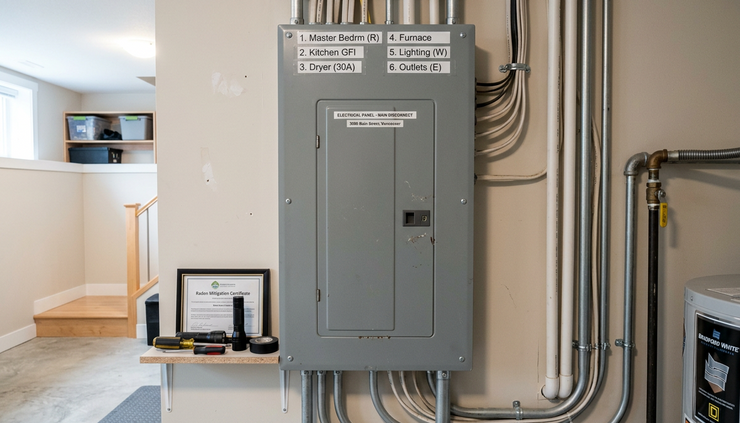
The panel shows whether the home has enough electrical capacity
One of the first things an inspector looks for is the panel’s rated amperage. Many modern homes have a 200-amp service, while older homes may have 100 amps, 60 amps, or even less in rare cases. The number does not tell the whole story, but it gives a useful starting point.
A smaller service may be fine for a modest home with gas appliances and limited electrical demand. It may be less suitable for a house with central air conditioning, electric heat, an electric range, a hot tub, a workshop, or plans for an electric vehicle charger.
The panel helps answer a practical question:
Can this electrical system reasonably support the way the home is being used today?
That question matters for buyers and sellers. A buyer may see future costs hiding in plain sight. A seller may learn that an upgrade could become a negotiation point. A homeowner may discover why breakers trip when several appliances run at the same time.
Inspectors do not usually perform a full load calculation during a standard home inspection. That is a job for an electrician. Still, the panel can show clear clues, such as:
A panel that is already full
Double-tapped breakers
Major appliances sharing circuits in odd ways
Evidence of add-ons that were not planned well
Service equipment that appears undersized for the home’s current demands
A full panel does not always mean the system is unsafe. It does mean there may be little room for future electrical needs without changes.
Labels reveal how well the system has been maintained
Panel labels may seem minor, but they say a lot about the care given to a home. Clear, accurate labels make the system safer to use. Confusing or missing labels can slow down emergency response and make repairs harder.
A good panel directory lists rooms, appliances, and major equipment in plain language. It should be specific enough that someone can turn off the correct circuit without guessing.
Poor labeling often looks like this:
“Lights” written across several breakers
Old labels crossed out many times
Handwritten notes that no longer match the home
Bedroom names from past owners
Blank spaces where circuits are active
Bad labels are not usually a major defect by themselves. They are a maintenance clue. If nobody has kept the directory current, other electrical work may also have been done casually.
During a home inspection, inaccurate labels can limit what the inspector can confirm. For example, if a breaker is marked for the dishwasher but controls several kitchen receptacles too, that raises questions about how the circuit was altered.
Breakers can show signs of unsafe wiring practices
Breakers are designed to protect wires from overheating. When they are installed or used incorrectly, the risk increases. Inspectors look closely at the arrangement, condition, and compatibility of breakers inside the panel when the cover can be safely removed.
One common issue is a double-tapped breaker. This means two wires are connected to a breaker designed for only one wire. Some breakers are listed for two conductors, but many are not. When a breaker is not designed for that setup, the connection may loosen over time and create overheating.
Other breaker concerns include:
Breakers from the wrong manufacturer
Breakers that do not seat properly
Missing filler plates that leave open gaps
Oversized breakers connected to smaller wires
Signs of heat damage or discoloration
Buzzing, burning smells, or melted insulation
These are not cosmetic details. They may point to work that needs prompt attention.

A home inspector may describe what is visible and recommend review by a licensed electrician. The inspector’s role is not to redesign the system during the inspection. The goal is to identify safety concerns and help the client understand their significance.
The panel can reveal the age of the electrical system
Electrical panels do not last forever. Age alone does not make a panel unsafe, but older equipment often deserves closer attention. A panel from several decades ago may not offer the same safety features, available parts, or capacity as newer equipment.
Inspectors may estimate age by looking at:
Manufacturer labels
Service rating
Breaker style
Wiring types entering the panel
Grounding and bonding methods
Overall condition of the enclosure
Some older panel brands and models are known in the inspection and insurance industries for reliability concerns. An inspector may not call a panel defective based only on a brand name, but they may recommend further evaluation if the equipment has a history of performance issues or no longer has readily available replacement parts.
Older homes may also contain wiring methods that deserve extra care, such as cloth-insulated wiring, ungrounded circuits, or aluminum branch wiring. The panel is often where those clues first appear.
This is where a home inspection can shift from a simple visual review to a practical planning tool. Even if the system works today, the panel may show that future updates are likely.
Neat wiring often points to careful workmanship
A tidy electrical panel does not guarantee that everything is correct. A messy panel does not automatically mean the home is unsafe. Still, workmanship matters.
Inside a well-maintained panel, wiring usually looks organized. Conductors are routed cleanly. Connections look secure. Grounds and neutrals are arranged in a way that matches the panel type. Cable entries are protected with proper connectors.
By contrast, rushed or unqualified work may leave visible clues:
Wires crossing in tangled bundles
Missing cable clamps
Loose conductors
Abandoned wires left in place
Open knockouts in the cabinet
Improvised splices inside the panel
Mixed wire sizes that do not match breaker ratings
The electrical panel often shows the difference between careful upgrades and piecemeal work done over many years. This matters because electrical systems tend to grow with a house. Finished basements, remodeled kitchens, new HVAC equipment, and outdoor features all add demand.
When those changes are done properly, the panel usually reflects that care. When they are not, the panel may reveal a pattern of shortcuts.
Moisture and corrosion are warning signs
Water and electrical equipment do not mix. A panel should be dry, secure, and protected from active moisture. During a home inspection, stains, rust, corrosion, or mineral deposits around the panel can signal a problem.
Moisture may come from several sources:
Basement seepage
Plumbing leaks
Condensation
Exterior wall leaks
Service entrance problems
Poor sealing around conduit or cables
Rust on the outside of the panel may be minor surface corrosion. Corrosion inside the panel is more serious. It can affect breakers, bus bars, and connections. It may also suggest that water entered the cabinet repeatedly.
If moisture is present, the electrical concern is only part of the story. The source of the water also needs to be found. Replacing electrical parts without fixing the leak may leave the same risk in place.
The panel shows whether safety devices are present
Modern electrical safety has improved over time. Panels can reveal whether a home has certain protections that may be required in newer installations or strongly recommended in older ones.
Two key devices are GFCI and AFCI protection.
GFCI protection helps reduce shock risk in areas where electricity and moisture may meet, such as kitchens, bathrooms, garages, basements, laundry areas, and outdoor receptacles.
AFCI protection helps reduce fire risk from certain types of arcing faults. It is commonly associated with living areas and bedrooms in newer electrical installations.
These protections may appear as special breakers in the panel or as devices located at receptacles. A home may have some protected areas and some unprotected areas, especially if it has been updated over time.
An inspector may test accessible GFCI devices and note where protection appears missing or incomplete. They may also identify AFCI breakers where visible. Requirements vary by installation date and local code adoption, so the report may focus on safety and recommend correction rather than making a broad code judgment.
Open spaces and crowded panels both tell a story
A panel with spare breaker spaces suggests room for future circuits. That can be helpful for planned upgrades, such as a kitchen remodel, workshop, heat pump, or EV charging setup.
A crowded panel tells a different story. It may show that the home has reached the practical limit of the existing equipment. Some signs include tandem breakers, subpanels, or circuits added in every available space.
Tandem breakers are not automatically wrong. Some panels allow them in specific positions. Other panels do not. The issue is whether the breakers match the panel listing and whether the installation was done properly.
Subpanels also deserve attention. A properly installed subpanel can be a clean solution for added circuits. A poorly installed one can create grounding and bonding concerns, overloaded feeders, or confusing shutoff arrangements.
Here is a simple way to read what the panel may be saying:
Panel condition | What it may suggest |
Several open spaces | Future upgrades may be easier |
No open spaces | Expansion may require changes |
Many tandem breakers | The panel may be near capacity |
Added subpanel | The home has likely had electrical expansion |
Mixed breaker types | Compatibility should be checked |
The inspection report should explain what was observed, not just name the condition. A full panel is most useful to know when paired with context about the home’s size, equipment, and planned use.
The main disconnect matters in an emergency
The main disconnect is the device that shuts off power to the home or to a major part of the system. In many homes, it is a large main breaker at the top or bottom of the panel. In others, it may be outside near the meter or in separate service equipment.
An inspector looks for whether the main disconnect is present, accessible, and clearly identifiable. This is a safety issue. In an emergency, someone should not have to search through unlabeled equipment to shut power off.
Accessibility also matters. A panel blocked by stored items, shelves, appliances, or finished construction can make maintenance and emergency access harder. Most electrical equipment needs clear working space in front of it. If a panel is hidden behind a cabinet or squeezed into a tight closet, the inspector will likely call that out.
The panel may reveal unpermitted or amateur work
Many homes have a history of improvements. Some were completed by licensed professionals. Others were done by owners, handymen, or contractors working outside their specialty.
The panel may show clues of unpermitted or amateur electrical work, such as:
New-looking cables entering an old panel with no clear organization
Circuits added for finished spaces that do not match the rest of the installation
Handwritten labels for major remodel areas
Open splices or unusual junctions near the panel
Materials that look newer than the surrounding system
Workmanship that differs sharply from the original wiring
These clues do not prove that work was unpermitted. They do justify questions. A buyer may ask for permits, receipts, or electrician records. A seller may choose to have questionable work reviewed before listing the home.
The panel often becomes the starting point for those conversations because it gathers many parts of the home’s electrical history in one place.

What inspectors can and cannot do at the panel
A standard home inspection is visual and noninvasive. Inspectors check accessible parts of the electrical system and report visible defects, safety concerns, and limitations.
Many inspectors remove the panel cover when it is safe to do so. They may decline if the panel is blocked, damaged, wet, unsafe, sealed, or otherwise risky to open. That limitation should appear in the inspection report.
Inspectors generally do not:
Calculate the full electrical load for the home
Move stored items or dismantle finished surfaces
Repair wiring during the inspection
Confirm every hidden connection
Guarantee that all work meets current code
Energize systems that are shut down
That does not make the panel review less valuable. It helps set the right expectation. The inspection identifies visible concerns and tells you when a licensed electrician should take the next step.
When an electrical panel deserves follow-up
Some findings are minor maintenance items. Others deserve prompt evaluation. A home inspector may recommend an electrician when the panel shows signs of overheating, corrosion, unsafe breaker arrangements, damaged wiring, missing covers, improper grounding or bonding, or outdated equipment associated with known concerns.
Follow-up is especially wise when the home has:
Frequent breaker trips
Flickering lights
Warm or buzzing equipment
Burning smells
Recent remodeling with unclear records
A full panel and planned electrical upgrades
Older wiring visible at the panel
Electrical work is not a good place to guess. The panel can tell you where the concerns are, but repairs and upgrades should be handled by qualified professionals.
The takeaway from the panel
The electrical panel is more than a utility box. It is a compact history of the home’s electrical life. It can show whether the system has enough capacity, whether past work was done carefully, whether safety devices are present, and whether age or moisture may be creating risk.
During a home inspection, the best panel findings are boring: clean wiring, clear labels, proper breakers, dry conditions, safe access, and no signs of overheating. When the panel tells a different story, listen to it. That early warning can help prevent surprises, guide negotiations, and point to the right repairs before small concerns become expensive ones.
Call David at Homegenix Home Inspections LLC!
727-282-4047

Comments