


A Home Inspector’s Guide to Knowing When to Call a Specialist

A home inspection is a broad, visual assessment. It is not a full engineering review, a code compliance inspection, or a license to diagnose every hidden defect behind a wall.
That is exactly why judgment matters.
A strong home inspector does more than spot defects. They know when a condition is outside the scope of a standard home inspection, when a system needs deeper testing, and when the right answer is, “This should be evaluated by a qualified specialist.”
That phrase is not a weakness. Used well, it protects the client, the inspector, and the transaction. More than that, it reflects the core skill of the profession: seeing enough to recognize when more expertise is needed.

The home inspector’s role is broad, not unlimited
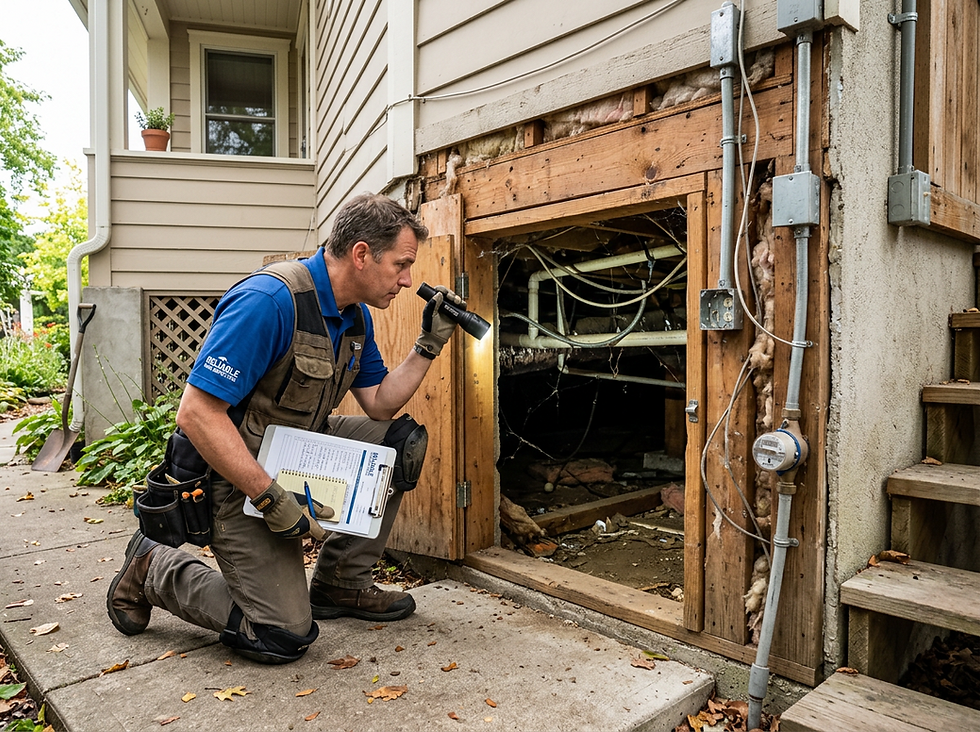
A home inspector is a generalist. The job is to inspect readily accessible systems and components, report visible defects, and explain conditions that may affect safety, performance, or durability.
That usually includes major areas such as:
Roofing
Exterior cladding and drainage
Structure
Electrical systems
Plumbing systems
Heating and cooling equipment
Interior rooms
Insulation and ventilation
Built-in appliances, depending on the scope
A specialist, by contrast, focuses on one area in greater depth. A structural engineer evaluates load paths and movement. A licensed electrician tests electrical issues beyond a visual inspection. A roofer can lift, probe, and repair roof materials in ways a home inspector normally should not.
The line between those roles matters.
Most home inspection standards of practice limit inspections to visible and readily accessible conditions. Inspectors are not expected to dismantle systems, move stored belongings, perform engineering calculations, or predict the remaining life of every component with precision.
That does not lower the value of the inspection. It clarifies it.
A good inspection identifies concerns early, gives the client useful context, and points them toward the next right step when the concern needs specialized review.
Calling a specialist is a sign of professional judgment
Some inspectors hesitate to recommend specialists because they worry it sounds uncertain. In reality, certainty can be the bigger risk when it is not earned.
There is a difference between making a clear observation and making an unsupported conclusion.
For example, an inspector can say:
“The foundation wall has horizontal cracking and visible inward displacement. This condition should be evaluated by a qualified structural engineer before closing.”
That statement is clear, useful, and defensible.
The inspector is not guessing at the exact structural cause. They are reporting what is visible, explaining why it matters, and directing the client to the right expert.
That is stronger than writing, “Monitor the crack,” when the wall may be actively moving. It is also stronger than declaring, “The foundation is failing,” without the training or data to support that conclusion.
The best reports are specific about what was observed and careful about what has not been determined.
Conditions that often call for a specialist
Not every defect needs a specialist. Loose outlets, missing GFCI protection, clogged gutters, and minor caulking gaps can usually be reported plainly.
The need for a specialist rises when the condition involves safety, hidden damage, expensive repairs, or technical testing beyond a visual inspection.
System or concern | When a specialist is usually the right call |
Structure | Significant movement, unusual cracking, sagging floors, rotated walls, damaged beams, or suspected settlement |
Electrical | Scorched components, unsafe panel conditions, aluminum branch wiring, overloaded equipment, or amateur wiring that cannot be fully traced |
Roof | Active leaks, widespread deterioration, complex flashing concerns, storm damage, or unsafe roof access |
HVAC | Inoperative equipment, combustion concerns, poor performance, abnormal noise, or equipment needing pressure or refrigerant testing |
Plumbing | Sewer line concerns, active leaks, low pressure that needs diagnosis, fuel gas issues, or suspected concealed damage |
Chimney and fireplace | Creosote buildup, damaged liners, improper clearances, cracking, or signs of prior chimney fire |
Environmental concerns | Suspected mold, asbestos-containing materials, radon, lead-based paint, or indoor air quality concerns |
Pest damage | Visible termite tubes, carpenter ant activity, wood-boring insect damage, or conditions needing treatment recommendations |
Septic or well systems | Any condition needing flow testing, water quality analysis, tank inspection, or specialized equipment |
Pools and spas | Electrical bonding concerns, leaking systems, damaged surfaces, or equipment outside the inspector’s training |
This is not a complete list. It is a reminder that certain systems can carry risk beyond what is visible during a general inspection.
Structural concerns deserve special care
Structure is one of the most important areas where an inspector needs restraint.
Many homes have cracks. Some are cosmetic. Some are related to shrinkage or normal settlement. Others point to movement, poor drainage, expansive soil, undersized framing, or prior repairs that did not solve the real problem.
A specialist is often needed when the inspection reveals:
Horizontal foundation cracks
Stair-step cracks that widen across masonry
Bulging or leaning foundation walls
Beams that are cut, notched, crushed, or poorly supported
Sagging rooflines
Floors that slope sharply or feel unstable
Doors and windows that bind along with visible wall movement
Posts installed without proper footings or bearing support
The inspector’s job is not to calculate loads on-site. The job is to recognize signs that the load path may be compromised.
Good report language keeps the focus on visible facts:
“The center beam is supported by stacked wood shims and a temporary adjustable column. This is not a typical permanent support condition. A qualified structural contractor or structural engineer should evaluate and repair as needed.”
That gives the client a clear next step without overstating the inspector’s role.

Electrical defects can create immediate safety risks
Electrical systems are another area where a home inspector should know the boundary.
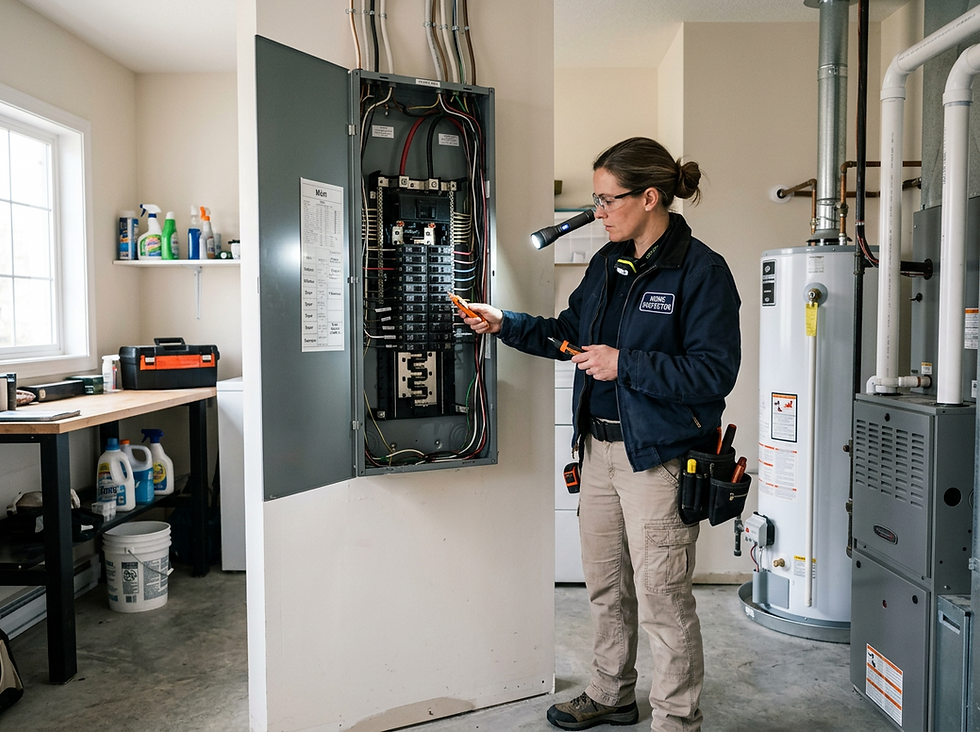
Inspectors can remove accessible panel covers when safe and within their practice standards. They can identify visible defects, such as doubled conductors, missing knockouts, open splices, improper bonding, or overheating marks.
But inspectors should not troubleshoot live circuits beyond their scope. They should not dismantle equipment, perform repairs, or dismiss red flags that may involve fire or shock hazards.
Specialist review is the safer recommendation when the inspector sees:
Burn marks inside a panel
Melted wire insulation
Buzzing or arcing equipment
Federal Pacific or Zinsco panels, where further evaluation is often recommended due to known concerns
Aluminum branch wiring
Multiple amateur wiring repairs
Ungrounded three-prong receptacles throughout the home
Missing bonding at service equipment
Evidence of moisture inside electrical components
Electrical wording should be direct. Avoid soft language when safety is involved.
“The electrical panel contains scorched insulation and evidence of overheating. This is a potential fire hazard. A licensed electrician should evaluate the panel and make repairs before the system is relied upon.”
That kind of clarity helps the client understand urgency.
Roofs and attics often reveal hidden problems
Roofing can look simple from the ground and become complicated fast.
A standard inspection may include walking the roof if safe, viewing it from a ladder, using binoculars, or observing from windows or the ground. Access depends on weather, pitch, height, material, and safety.
Knowing when not to walk a roof is part of the job. A steep slate roof, icy shingles, fragile clay tile, or a deteriorated surface may be unsafe to access. The report should state the limitation and recommend further evaluation when needed.
Specialist review is often appropriate for:
Active leaking
Damaged or missing flashing
Soft or deteriorated roof decking
Widespread granular loss
Poorly installed roof coverings
Multiple layers of shingles
Improperly installed skylights
Chimney flashing defects
Attic staining that suggests roof leakage
Ventilation problems that may shorten roof life
The attic can add important context. Stained sheathing, wet insulation, fungal-like growth, rusted fasteners, and daylight through roof penetrations all help tell the story.
Still, an inspector should be careful about promising exact leak paths. Water travels. A stain below a roof vent may come from the vent, nearby flashing, condensation, or an older defect that has already been repaired.
The best recommendation is often simple: have a qualified roofing contractor evaluate and repair as needed.
HVAC and plumbing require the right testing
Heating, cooling, and plumbing systems are full of components that may require tools, licensing, or trade experience beyond a general inspection.
An inspector may operate normal controls, observe performance, report visible damage, and note unsafe conditions. That does not mean they should open sealed HVAC components, test refrigerant pressures, scope sewer lines, or diagnose every cause of low water flow.
Call a specialist when the issue needs deeper testing.
For HVAC, that may include:
A furnace that does not respond to normal controls
Flame rollout, soot, or unusual burner operation
Suspected cracked heat exchanger
Condensate leaks
Missing or damaged flue pipes
Abnormal vibration or noise
Cooling equipment that cannot be tested due to outdoor temperature
Poor temperature split that needs further diagnosis
For plumbing, specialist review may be needed for:
Active leaks in concealed spaces
Galvanized pipes with poor flow
Polybutylene supply piping
Sewer gas odors
Slow drains throughout the home
Backflow concerns
Fuel gas piping defects
Water heater combustion or venting issues
A sewer scope is a good example. A standard inspection cannot see inside the buried sewer lateral. If there are multiple slow drains, mature trees near the line, a vacant house, or signs of prior backups, recommending a sewer camera inspection may be the most useful advice in the report.

Environmental and health-related concerns need careful wording
Home inspectors often encounter conditions that may involve mold, asbestos, lead, radon, or other environmental hazards. These topics require care.
Do not identify a substance with certainty unless you are qualified and have proper test results. A material that looks like asbestos may not be asbestos. Staining that looks like mold may need laboratory confirmation. A musty odor may point to moisture, microbial growth, or poor ventilation.
A safe approach is to describe the observation, not guess the lab result.
Use wording such as:
“Fungal-like staining was observed on the roof sheathing.”
“The floor tile may contain asbestos based on age and appearance.”
“The basement had a strong musty odor and elevated moisture readings at the finished wall.”
“Radon testing was not part of this inspection unless separately arranged.”
Then recommend the right next step.
Environmental issues are especially important because they may involve health concerns, specialized sampling, and state-specific rules. The inspector should avoid alarming language, but should also avoid minimizing a real concern.
When a condition may affect health or indoor air quality, recommend qualified testing or evaluation rather than guessing.
Pest, chimney, pool, well, and septic systems may sit outside the standard scope
Some systems fall into a gray area because clients assume they are included, while many inspection standards exclude them unless added by agreement.
Wood-destroying insect inspections may require a separate license in many states. Chimney interiors often need specialized camera equipment. Pools and spas include electrical, plumbing, structural, and safety components. Wells and septic systems require testing and access that go beyond a normal visual inspection.
The safest path is to define the scope before the inspection and repeat limitations clearly in the report.
When visible signs point to a concern, call for the specialist.
Examples include:
Mud tubes on a foundation wall
Damaged trim with insect galleries
Rusted chimney dampers or cracked firebox panels
Missing pool bonding components
A well pressure tank that short cycles
Septic odors, soggy soil, or missing access covers
These are not minor details. They can lead to major repair costs and safety concerns. A general home inspection can flag them, but the client may need a pest professional, chimney sweep, pool contractor, well contractor, or septic inspector to understand the full condition.
How to write specialist recommendations that help clients
A vague recommendation can create confusion. A strong recommendation tells the client what was seen, why it matters, who should evaluate it, and when it should happen.
The best format is simple:
State the visible condition.
Explain the concern in plain language.
Recommend the type of specialist.
Clarify urgency if needed.
Avoid predicting hidden conditions unless evidence supports it.
Instead of writing:
“Have repaired by a professional.”
Write:
“The main electrical panel has open breaker spaces that expose energized components. This is a shock hazard. A licensed electrician should repair the panel cover before the panel is accessed by occupants.”
Instead of writing:
“Foundation crack noted.”
Write:
“The foundation wall has a horizontal crack with visible inward displacement. This can indicate structural movement. A qualified structural engineer should evaluate the wall before closing and provide repair recommendations.”
Good recommendations reduce confusion. They also show that the inspector has a sound reason for referring the issue.
How to decide whether to call a specialist
When the answer is not obvious, use a practical decision filter.
Ask these questions during the inspection and while writing the report:
Could this condition affect safety?
Could it involve hidden damage?
Could the repair be expensive?
Does diagnosis require tools or testing outside a general inspection?
Does the system require a license or certification to evaluate fully?
Is the condition active, worsening, or unclear?
Would a reasonable client expect more information before making a decision?
Would I be comfortable defending my conclusion if I do not recommend further evaluation?
If the answer to several of these is yes, a specialist recommendation is likely appropriate.
That does not mean every minor defect needs escalation. Over-referring can weaken a report and frustrate clients. The goal is balance.
A missing outlet cover does not need an electrician in most reports. Scorched wiring does. A small drywall crack may not need an engineer. A bowed foundation wall does. A dirty air filter does not need an HVAC contractor. A furnace with soot at the burner area does.
The difference comes down to risk, scope, and confidence.

The best inspectors protect the client by staying honest
Clients do not need an inspector who pretends to know everything. They need one who can separate ordinary defects from serious concerns, explain what is visible, and recognize when a deeper evaluation is the responsible next step.
That is the heart of A Home Inspector’s Guide to Knowing When to Call a Specialist. The inspector’s value is not limited to answers. It also comes from good judgment, clear boundaries, and sound recommendations.
The right specialist referral can prevent missed safety hazards, reduce surprise repair costs, and give the client better information before a major decision.
A good home inspector knows the house. A great one knows their limits too.
Call David at Homegenix Home Inspections LLC!
727-282-4047
Comments