


Why Proper Installation Matters for Electric Tankless Water Heaters

An electric tankless water heater can be a great upgrade, but it is not a plug-and-play appliance. It heats water on demand, often using a large amount of electricity in a short burst. That makes the installation just as important as the unit itself.
When a tankless heater is installed correctly, it can deliver steady hot water, save space, and run safely for years. When it is installed poorly, the results can show up fast: lukewarm showers, tripped breakers, leaks, error codes, shortened equipment life, or serious electrical hazards.
The difference usually comes down to planning, code compliance, and detail. A good installation matches the heater to the home’s electrical system, water demand, plumbing layout, and local requirements.

Electric tankless heaters work differently than storage tanks
A traditional tank water heater stores hot water and reheats it as needed. An electric tankless unit does something different. It heats water only when a fixture calls for hot water.
That sounds simple, but the process is demanding. Cold water enters the unit, passes over electric heating elements, and leaves at the desired temperature. The heater has only a short window to raise the water temperature while the water is moving.
That means three things matter from the start:
How cold the incoming water is
How much hot water the home needs at once
How much electrical power the heater can safely draw
If any of those are misjudged, the heater may not perform the way the homeowner expects. A unit that works well for one bathroom may struggle when two showers and a washing machine run at the same time. A heater installed in a warm climate may not produce the same flow rate in a colder region where incoming water is much colder.
Proper installation is not only about connecting pipes and wires. It is about making sure the entire system fits the home.
The electrical setup has to match the heater
The biggest installation issue with electric tankless water heaters is electrical capacity. These units often need dedicated high-amperage circuits. Many require 240-volt service, multiple breakers, properly sized wire, and approved disconnects.
That work should not be guessed. The installer needs to follow the manufacturer’s specifications, the National Electrical Code, and local code requirements.
A poor electrical installation can lead to:
Breakers that trip during normal use
Overheated wiring
Damage to heating elements or controls
Flickering lights when hot water runs
Failed inspections
Fire risk in severe cases
The home’s electrical panel also matters. Some homes do not have enough available capacity for a whole-home electric tankless unit without an electrical service upgrade. Installing the heater anyway can overload the system.
This is one of the main reasons proper installation matters. The heater may be new, efficient, and correctly sized on paper, but if the electrical system cannot support it, performance and safety suffer.
A licensed electrician can evaluate the panel, calculate load, install the correct breakers, and use the right wire size. That step is not an upsell. It is often the difference between a safe installation and an unsafe one.

Proper sizing protects comfort and performance
Many tankless problems start before installation day. The wrong unit gets selected, then the installer has to make it work. That rarely ends well.
Electric tankless heaters are rated by how much hot water they can deliver at a specific temperature rise. Temperature rise means the difference between incoming cold water and the desired hot water temperature.
For example, raising water from 50°F to 120°F requires more power than raising water from 70°F to 120°F. The colder the incoming water, the harder the heater has to work.
Flow rate also matters. A bathroom sink uses less hot water than a shower. A shower uses less than several fixtures running at once. The heater must be sized for the real demand, not just the number of bathrooms.
Installation factor | Why it matters |
Incoming water temperature | Colder water reduces the flow of hot water the unit can produce |
Peak hot water demand | Multiple fixtures can exceed the heater’s capacity |
Electrical service size | The panel must safely support the load |
Distance to fixtures | Long pipe runs can delay hot water delivery |
Water quality | Hard water can increase scale buildup inside the unit |
A properly sized system does not promise endless hot water at any flow rate. It provides hot water within the limits of the unit and the home’s utilities.
That distinction matters. Tankless heaters are often marketed as “endless hot water,” but the real promise is continuous hot water when demand stays within the heater’s capacity.
Plumbing details affect safety and efficiency
The plumbing side of the installation needs just as much care as the electrical side. Water must flow through the heater at the right pressure and direction. Connections need to be secure, accessible, and compatible with the materials used in the home.
Good plumbing installation includes:
Correct hot and cold connections
Proper shutoff valves
Service valves for flushing and maintenance
Leak-free fittings
Pipe material approved for the application
Protection from freezing where needed
Compliance with local plumbing code
Service valves deserve special attention. Electric tankless heaters need periodic maintenance, especially in areas with hard water. Service valves make flushing the unit much easier. Without them, routine maintenance becomes more difficult and more expensive.
Some installations may also require additional components based on code or manufacturer instructions. These can include pressure relief devices, backflow protection, expansion control, or other safety measures. The exact requirements vary by location and system design.
A careful installer does not assume. They check the manual, inspect the existing plumbing, and follow local requirements.
Location can make or break the installation
Tankless units save space, but they still need the right location. The heater should be mounted where it is protected, accessible, and suitable for service.
A good location usually has:
Enough wall strength to support the unit
Clear access to the front panel
Safe routing for electrical wiring
Short, practical plumbing runs
Protection from freezing temperatures
Room to perform maintenance
Installing the unit too far from major fixtures can create a common complaint: hot water takes too long to arrive. The heater may be working correctly, but hot water still has to travel through the pipe. If the pipe run is long, the wait can feel frustrating.
Location also affects future service. A unit mounted in a cramped corner, above stored items, or behind other equipment can turn a simple inspection into a difficult job.
Accessibility is part of a proper installation. A heater that cannot be reached easily will not be maintained as often as it should be.
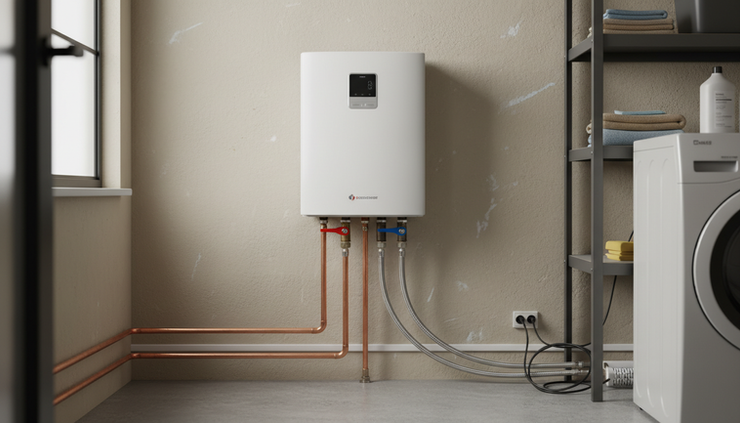
Poor installation can shorten the life of the heater
An electric tankless water heater has sensitive parts inside. Heating elements, flow sensors, temperature sensors, control boards, and seals all need the right conditions to work well.
Poor installation can put stress on those parts. Low flow, mineral buildup, incorrect wiring, pressure problems, and repeated overheating can all lead to early failure.
Common signs of installation-related trouble include:
Water that turns hot and cold during use
Error codes soon after installation
Breakers tripping when fixtures run
Lower hot water flow than expected
Strange noises inside the unit
Leaks around fittings
Burn marks, heat damage, or unusual odors near wiring
Some of these issues can also come from product defects or normal wear, but installation should be checked first. A new unit should not struggle from day one.
Correct installation also protects the warranty. Manufacturers often require the unit to be installed according to their instructions and local code. If the heater fails and the installation does not meet those requirements, warranty coverage may be affected.
Code compliance is not just paperwork
Permits and inspections can feel like a hassle, but they serve a real purpose. Water heaters involve electricity, plumbing, heat, pressure, and household safety. Code requirements help reduce risk.
A code-compliant installation helps confirm that:
Electrical circuits are sized correctly
Breakers and disconnects are appropriate
Wiring methods are approved
Plumbing connections are safe
Required clearances are maintained
Safety devices are installed when needed
Local rules can vary. A requirement in one city may not be identical to a requirement in another. That is why a one-size-fits-all installation approach is risky.
For nationwide homeowners, the best practice is the same everywhere: follow the manufacturer’s manual, use qualified tradespeople, and meet local code.
Skipping permits may save time upfront, but it can create problems later. It may complicate home sales, insurance claims, warranty questions, and future repairs.
Maintenance starts with the installation
A tankless heater needs less storage space than a tank, but it still needs maintenance. The best installations make that maintenance simple.
Hard water is one of the biggest long-term concerns. Minerals can collect inside the heat exchanger or heating chamber, reducing efficiency and flow. In severe cases, scale can cause overheating or damage.
The right installation can help by including service valves and, when appropriate, water treatment. In hard-water areas, a softener or scale-control system may help protect the heater. The best choice depends on local water conditions and the manufacturer’s recommendations.
Regular maintenance may include:
Flushing the unit to remove scale
Cleaning inlet filters
Checking for leaks
Inspecting wiring and connections
Reviewing error codes or performance issues
Confirming proper flow through fixtures
A heater installed without maintenance access may be neglected. Over time, that can turn a preventable issue into a costly repair.
Professional installation is usually the safer choice
Some home projects are friendly to careful DIY work. Electric tankless water heater installation usually is not one of them.
The job can involve high electrical loads, panel work, plumbing changes, permits, bonding and grounding requirements, and manufacturer-specific instructions. A small mistake can cause a big problem.
A qualified installer brings three things to the project:
Correct planning
They check demand, electrical capacity, location, and code requirements before installing the unit.
Safe workmanship
They use the right materials, follow approved wiring methods, and make secure plumbing connections.
Accountability
They can pull permits when needed, coordinate inspection, and stand behind the work.
That does not mean homeowners should stay uninvolved. A good homeowner can ask smart questions before work begins.
Useful questions include:
Is my electrical panel large enough for this unit?
What flow rate can I expect in winter?
Will this heater support two showers at once?
Are service valves included?
Does this installation require a permit?
How often should the unit be flushed?
Will my water quality affect the heater?
Clear answers before installation prevent disappointment after installation.

The real goal is reliable hot water
A properly installed electric tankless water heater should feel simple to use. Turn on the hot water, wait for the line to clear, and get steady temperature within the unit’s rated capacity.
That simple result takes careful work behind the wall and inside the panel. The heater must be sized correctly, wired safely, plumbed cleanly, mounted in the right place, and set up for maintenance.
Poor installation can make a good unit seem like a bad product. Proper installation lets the heater do what it was designed to do.
The best next step is to treat installation as part of the purchase, not an afterthought. Before choosing a model, check the home’s electrical capacity, hot water demand, plumbing layout, water quality, and local code requirements. A well-installed system protects comfort, safety, and the life of the heater.
Call David at Homegenix Home inspections LLC for all Home inspection services
727-282-4047


Comments