


Why Homegenix Uses Drones for More Accurate Roof Inspections

A roof can look fine from the ground and still hide damage where it matters most. Missing shingles, lifted flashing, cracked vent boots, soft spots near valleys, and worn sealant often sit above the line of sight. That is why a complete home inspection needs more than a quick glance from the driveway.
At Homegenix Home Inspections, drones help us inspect roofs with better visibility, better documentation, and less guesswork. They let us see steep slopes, high ridges, chimney areas, skylights, gutters, and other details that can be hard or unsafe to reach with a ladder.
A drone does not replace a trained home inspector. It gives the inspector a clearer view. The real value comes from pairing high-quality aerial images with field experience, safe inspection practices, and a careful review of the roof system as a whole.

Roof inspections are often limited by access
Roofs are one of the most important parts of a home, but they are also one of the hardest to inspect safely. A roof’s condition affects water protection, energy performance, attic ventilation, and long-term maintenance costs. Small defects can become expensive if water reaches roof decking, insulation, wall cavities, or interior finishes.
The challenge is access.
Some roofs are too steep to walk safely. Some are too high for a standard ladder setup. Some have fragile roofing materials that can crack under foot traffic. Wet weather, moss, loose granules, ice, or heat can make a walkable roof unsafe in a matter of minutes.
Even when a roof can be walked, not every section is easy to inspect closely. Certain areas are naturally harder to evaluate from the ground or from the roof edge, including:
Valleys where two roof slopes meet
Flashing around chimneys and sidewalls
Skylights and roof windows
Plumbing vent boots
Ridge caps and hip caps
Dormers and upper-story transitions
Gutter edges and downspout outlets
Low-slope roof sections behind parapets or additions
A ladder can help, but it has limits. Binoculars can help, but they do not provide the same record as clear photos taken from above. This is where drone-assisted inspections make a real difference.
Drones give inspectors a better angle
A roof is designed to shed water from the top down. Looking at it from the same direction water travels often reveals more than looking up from below. A drone can move around the home and capture the roof from multiple angles without placing extra weight on it.
That matters because roof problems are often subtle.
A lifted shingle may only be visible from one side. A cracked vent boot may look normal until viewed from above. A loose ridge cap may blend into the roofline from the yard but stand out in an aerial image. A gutter full of debris may not be obvious from the ground, especially on a two-story home.
With a drone, Homegenix can document roof features such as:
Shingle wear, curling, cracking, or missing pieces
Exposed fasteners and failed sealant
Damaged flashing around roof penetrations
Debris buildup in valleys and gutters
Tree limb contact near the roof surface
Signs of patching or uneven repairs
Sagging roof lines or visible surface irregularities
Storm-related concerns, when visible from the exterior
The benefit is not just height. It is perspective. A drone can hover, reposition, and photograph areas that are hard to view from a ladder or roof edge. That gives the inspector more information to work with and gives the client a clearer understanding of what was observed.

Better photos lead to better reports
A home inspection report should be clear enough that a homeowner, buyer, seller, or agent can understand what was found. Vague notes are not enough when a roof defect could affect repair costs or future maintenance.
Drone images help make the report more useful.
Instead of simply writing “roof covering shows wear,” the report can include photos that show the actual area of concern. If a chimney flashing detail looks worn, the image can help show its location. If a valley has debris, the photo can point to the exact slope. If shingles are missing on the rear roof plane, the client does not have to guess where the issue is.
This kind of documentation helps in several ways.
It creates a visual record
Roof conditions can change over time. A clear image from the inspection gives the client a snapshot of what the roof looked like on that day. That can be useful for maintenance planning and for comparing future changes.
It reduces confusion
Roof terminology can feel unfamiliar. Many people do not use terms like ridge cap, step flashing, pipe boot, or roof valley every day. A photo makes the explanation easier to follow.
It supports better conversations
If the report recommends evaluation by a qualified roofing contractor, drone photos can help the contractor understand the area in question before visiting the property. The photos do not replace a roofing contractor’s findings, but they can make the next step more focused.
It improves transparency
Good reporting is not about alarm. It is about showing what was visible, where it was found, and why it matters. Drone images support that goal.
Drones help keep the inspection safer
Roof inspections involve risk. Ladders, steep slopes, loose shingles, wet surfaces, and high edges can create unsafe conditions. A careful inspector knows when to walk a roof and when not to.
Drones give inspectors another safe option.
If a roof is too steep, too high, too slick, or likely to be damaged by foot traffic, a drone can gather useful images without requiring the inspector to climb onto the roof surface. That helps protect the inspector and the property.
It can also protect delicate roofing materials. Some roofs should not be walked unless absolutely necessary. Clay tile, slate, older shingles, and certain specialty materials can crack or loosen under weight. Even asphalt shingles can be harmed if they are brittle, overheated, or already worn.
Safety is not a shortcut. It is part of a professional inspection standard. When conditions make roof access unsafe, forcing a roof walk can create more problems than it solves. A drone provides a practical way to inspect visible exterior conditions while respecting those limits.
A safer inspection method is better when it also improves visibility and leaves the roof undisturbed.
Drone roof inspections still require judgment
A drone is a tool, not a diagnosis by itself. It can show visible conditions on the roof surface, but it cannot lift shingles, test materials, or see hidden damage under the covering. It also cannot replace attic observations, moisture concerns, or the experience needed to interpret what the images show.
That is why Homegenix uses drones as part of the inspection process, not as the entire process.
A good roof inspection considers how different parts of the system work together. The exterior roof covering is one piece. The full picture may also involve:
Attic ventilation
Signs of leaks or staining
Roof structure and visible framing concerns
Bathroom and kitchen exhaust routing
Insulation conditions
Gutter drainage
Grading and water flow around the home
For example, a drone may show worn shingles around a plumbing vent. The attic may show no current staining below that area. That does not mean the vent boot is fine forever. It means the inspector can give a more balanced explanation: there is visible exterior wear, but no visible interior evidence at the time of inspection.
The opposite can also happen. The attic may show staining, but the roof surface may not reveal an obvious defect from above. In that case, the drone photos become part of the evidence, not the whole answer.
This judgment matters because roof conditions are rarely simple. A missing shingle is easy to explain. Intermittent leaks, poor ventilation, uneven aging, and prior repairs take more context.
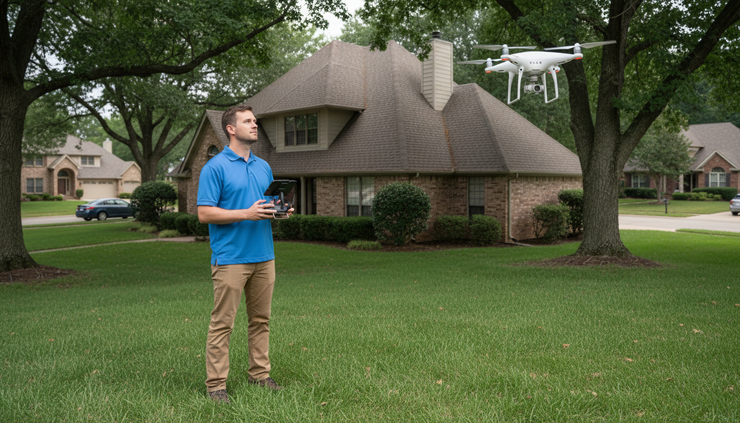
Drones are especially useful for complex roof designs
Many homes have roof designs that are not simple rectangles. Additions, dormers, valleys, skylights, chimneys, and multiple roof planes can create areas where water management becomes more complicated. These intersections deserve close attention because they are common places for leaks to start.
Drone images are useful on homes with:
Multiple roof levels
Steep gables
Chimneys on upper slopes
Roof sections above porches or garages
Skylights and solar penetrations
Trees close to the roof
Large gutter runs
Limited safe ladder placement
A complex roof can hide small defects in plain sight. A drone can move around the home and capture each roof plane from a useful angle. It can also photograph the relationship between roof sections, like how one slope drains into another or where debris tends to collect.
This is especially helpful after storms or heavy winds, when damage may affect only one area of the roof. A few missing shingles on the rear slope can go unnoticed from the street. A drone can help spot those conditions before water has more time to enter the home.
Drones can reduce disruption during the inspection
A home inspection already involves a lot of moving parts. The inspector evaluates the exterior, interior, attic, garage, electrical system, plumbing, HVAC, crawl space when accessible, and more. Roof access can be one of the most time-consuming and condition-dependent parts of the visit.
A drone can make the roof portion more efficient without rushing the work. The inspector can capture multiple roof angles, review images, and include the clearest photos in the report. When conditions are right, drone use can reduce the need to set ladders in multiple spots around the property.
That can be helpful when landscaping, fences, slopes, wet ground, or nearby structures make ladder placement difficult. It may also reduce the chance of damage to gutters, siding, plants, or roof materials.
Efficient does not mean careless. It means using the right tool for the situation. Sometimes that tool is a ladder. Sometimes it is a drone. Often, the best approach uses both.
Weather and site conditions still matter
Drones are useful, but they have limits. Homegenix uses them when conditions allow for safe and responsible operation. Weather, visibility, nearby obstacles, and local rules all affect whether a drone flight is appropriate.
Heavy rain, strong wind, poor visibility, and unsafe flight conditions can limit drone use. Trees, power lines, tight property boundaries, and nearby people or structures may also affect the flight plan. In some areas, airspace rules or property conditions may restrict use.
When a drone cannot be used, the inspection still goes forward using other safe methods. Those may include ground-level observation, ladder-at-eave inspection, attic evaluation, and clear reporting of any roof access limitations.
That transparency matters. If a roof area cannot be fully viewed, the report should say so. A professional inspection does not pretend to see what could not be seen.
What clients gain from drone-assisted roof inspections
The biggest benefit is confidence. Not false certainty, but a clearer understanding of the roof’s visible condition.
A drone-assisted inspection can help clients see what the inspector saw. That makes the report more practical and easier to use after the inspection is over. Instead of relying on memory, the client can return to the report and review photos of roof slopes, penetrations, gutters, and areas needing attention.
That can help with:
Planning maintenance after moving in
Discussing concerns with a roofing contractor
Understanding which issues are minor and which need attention
Comparing visible roof conditions over time
Documenting roof areas that were difficult to inspect from the ground
The goal is a more accurate roof inspection through better information. Drone images give Homegenix another way to find, document, and explain roof conditions that might otherwise be missed or described too generally.

Why Homegenix chooses the right method for each roof
No two homes are exactly the same. A low-slope ranch roof on a dry day may be safely inspected one way. A steep two-story roof after rain may require a different approach. A tile roof, a roof with limited ladder access, or a roof blocked by mature trees may call for extra care.
Homegenix uses drones because they help us inspect more thoroughly when roof access is limited or when aerial photos can improve the report. They support safer work, better documentation, and clearer communication.
The best inspections do not rely on one tool. They rely on trained judgment, careful observation, and honest reporting. Drones fit that standard well. They help reveal roof details that matter, while keeping the process safer for the inspector and gentler on the property.
A roof protects everything below it. When it is inspected with clear images, careful context, and the right tools for the job, the result is a report that is easier to trust and easier to act on.
Call David at Homegenix Home Inspections LLC
727-282-4047


Comments